Posts

How using video can improve student outcomes

How using video can improve student outcomes The use of instructional video has been accepted as having a generally more positive outcome on student learning compared to more traditional means of content delivery in education, and teachers interested in this emerging teaching practice will be able to explore a range of means to produce video at the National Education Summit when it opens in Melbourne at the end of August. Flipped learning expert Steven Kolber says instructional video is a way to free up the teacher or leader to engage more actively with students and staff while still delivering Direct Instruction or information as needed. Named among the ‘Top 100 Educators leading Flipped Learning’ in the K-12 sector for 2018, Kolber is an advocate for delivering instructional content, particularly via video. “Making video content for students need not be expensive or complicated and can be achieved by anyone with the desire to upgrade their delivery of content,” he said. “F...
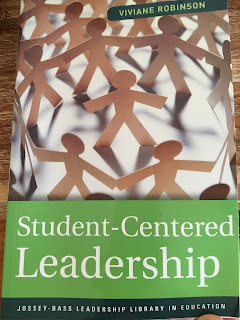
Student-Centred Leadership by Viviane Robinson

Image
Student-Centred Leadership by Viviane Robinson A solid leadership book, like much of the Edu Leadership writing landscape she leans quite heavily on Marzano and Hattie’s Meta-meta-analysis, if you don’t put too much stake into these two scholars work you will likely find some elements of this book a challenge. Indeed, the five elements she explores are based around ‘effect sizes’, so her entire book is intrinsically tied to the meta-meta-analysis or meta-analysis approach, something that is being increasingly challenged within the educational literature.  Putting that minor point aside, she provides a strong case for different elements of leadership and explores reasonably interesting anecdotes consistent with these themes, these anecdotes are not entertaining in themselves but provide context and illustration to the broad umbrella ideas being presented. She uses references relatively sparingly, citing the majority of key, well-known figures. When she does provide ...

Teacher: One woman’s struggle to keep the heart in teaching (#ieureading)

Teacher: One woman’s struggle to keep the heart in teaching (#ieureading) Gabbie touches on the core touchstones of Australian Education, Initial Teacher Education as problematic and overly theoretical, learning by trial-by-fire, and apprenticeship of observation. At points she moves beyond her own experience to draw out the broader difficulties within our system, AITSL standards, NAPLAN and an increased focus on standardisation and the “Professionalisation” of teachers without allowing sufficient time for this to occur. Her comment on ‘teacher tiredness’ that leaves teachers curled up in the foetal position with their chosen vice struck home violently. She touches on the complex balancing act of caring and letting go, typified by her dual revelations of: “I teach Kindergarten” Versus “I do the most important work in the world” Whilst also drawing out the views of teaching as an Art versus teaching as a science and participating in the community of your school...

Instructional Video: the theory and purpose (NES 2019)

Instructional Video: the theory and purpose Instructional Video provides unique affordances, or possibilities, that can shift teaching and learning from the page onto the webpage and allows students to become more empowered and independent as a result. Note, it makes no suggestion that students will be willing to make these changes, yet, as modern teachers I feel we ought to prepare students for the wider world and model our own practice on that practised beyond the world of compulsory schooling. James Paul Gee (2003) provides distinctive suggestions about how Game-based learning involves a much higher expectation of its users than the majority of compulsory schooling which lends itself best to high-stakes testing rather than deep and authentic learning. Whilst the instructional video that we as teachers produce may not be more than online versions of Direct Instruction, by providing this content to, not only our student, but also the world’s students mirrors our expectatio...

Instructional Video: Positive personal outcomes for me (NES 2019)

Instructional Video: Positive personal outcomes for me Before jumping into the theory too heavily, I decided to take a moment to reflect on the positive outcomes that I have personally experienced by using instructional video for aspects of my teaching. If you take a moment to reflect on these positive outcomes, you may be more able to consider whether you are willing to create instructional videos and reap similar benefits in your own life. I will outline these positive outcomes in dot-point form, then you may read more into each element based on your level of interest. Here have been the positive outcomes I have experienced: Teaching Practice ·          I mproved direct instruction, more brevity and clarity ·          More precise, improvised and unscripted presentation ·          Greater awareness of speech patterns and faults ·   ...

#edureading - The too-be-published (?) Article

#edureading – The Article Methodology Grumet (1990) posits that our “songs” ought to have three parts: situation , narrative and interpretation , this idea informs the structure that follows. The situation section contains an explanation of the professional learning community of educators that is the focus of this paper. The narrative contains reflection from the participants within the group. The interpretation contains a combination of the context and narrative findings to produce suggestions for further exploration.  SITUATION: Introduction to #edureading On the 18 th of September 2018 the following message was posted on twitter: “Alrighty, here’s my pitch: academic reading room type thing, but without the academics. We read 1 academic article per month (maybe not the Christmas months), maybe #flippedlearning related, maybe not. Then we have a Skype chat about the reading and record it. #AussieED #vicpln ” The resulting respondents, a group of ed...